

Almost half an entire generation of potential new voters are being disenfranchised in plain sight, with just 95 days to go until the General Election on November 7. More than 80% of new voters have already been disenfranchised in the election last year of ‘representatives’ in our largest, youngest and most ethnically diverse city: Auckland.
The number of missing young voters is set to top a quarter of a million, which is more than voted in total for ACT and 50% more than voted in total for NZ First at the last election. It is almost 10 times the 1.08% margin over the 5% threshold that NZ First surpassed in 2023 when it got 6.08% of the vote and its eight seats in Parliament.
The democratic deficit in this election is set to be worsened if, as the Electoral Commission projects, 55,000 people who try to enrol to vote on election day will be turned away under new election rules legislated by the Government1. (See more analysis, charts and detail below, and in the video above.)
Elsewhere in the news around Aotearoa’s political economy of housing, climate and poverty this morning:
PM Christopher Luxon apologised yesterday for his ‘parent-child’ comments about relations between the Government and small businesses to a business audience in Rotorua on Friday, saying at his weekly news conference last night: “I am sorry if my comments do not properly acknowledge the challenges that many small business owners are facing, and that I got that wrong.”
The Post-$ published an editorial this morning titled: ‘Luxon’s impotence makes him prime minister in name only,’ adding: ‘The prime minister’s failure to recommend to the Governor-General, Dame Cindy Kiro, that she dismiss his foreign minister demonstrates that Christopher Luxon now holds his job in a de jure sense only.’ Others commented on the apology too2. See My Top Pick n’ Mix Six below
Almost a million notifications did not get sent to people eligible for cancer screening due to flaws in the national cervical cancer screening programme, RNZ reported last night from a Health NZ review released yesterday.
A senior figure in New Zealand First’s youth wing, Nicholas Newport (also known as Nicholas Wells), has been linked to a neo-Nazi group and online accounts that praised Adolf Hitler, Charlie Mitchell reported in a scoop yesterday for The Press-$. See Top Newspaper Article of the day below.
Dwelling consents fell 3.6% in seasonally adjusted terms in the month of June from May, after a 4.9% fall in the month of May from April, Stats NZ reported yesterday, as rising interest rates and the Government’s pullback from house building bear down on the sector. This follows a seasonally adjusted fall of 4.9% in May 2026.
Consents for non-residential construction fell 2.9% to $8.8 billion in the year to the end of June from the previous year. This is just above the sector’s 2020 Covid lockdown low and is the lowest in 11 years. It comes after the Government’s suspension of capital expenditure spending for hospital building, school building, roads and railways in early 2024. “This shrinking pipeline of work points towards further falls in work put in place during the second half of this year,” Infometrics Economist Gareth Kiernan noted. See Chart of the Day below.
Join us as a paying subscriber to get my full daily selection of the news, analysis, commentary, links, charts, front pages and cartoons below, and to support this work I do sorting the signal from the noise in our political economy. Here’s 50% off for the first year.
FYI to all paying and free subscribers, I have decided to open this up immediately. Thanks in advance to paying subscribers for their permission.
A generation being disenfranchised in plain sight
It’s like watching a car crash in our political economy in slow motion, although it seems to have sped up this year.
The collapse in enrolment among potential young voters in this election cycle is brutal, especially as previous research shows that voters that don’t vote at their first opportunity are much less likely to vote throughout their lives.
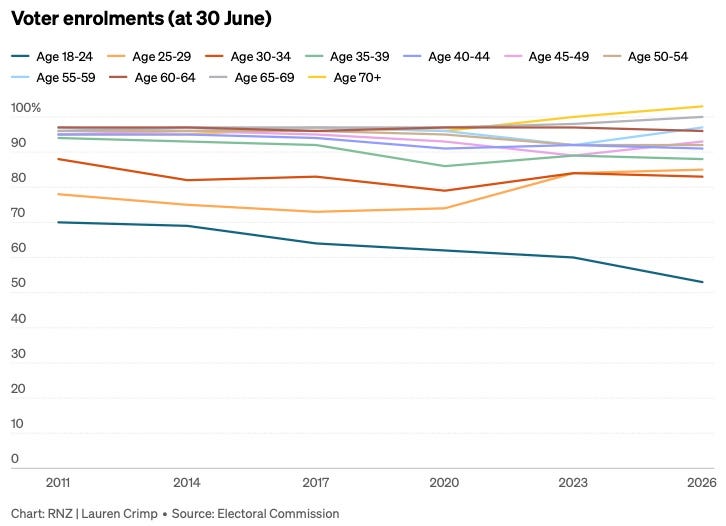
The enrolment rate for voters aged 18-24 has fallen to 53% as of the end of June, sliding for a sixth consecutive election cycle from 70% at the end of June 2011, Lauren Crimp reported3 yesterday for RNZ from Electoral Commission data.
Youth enrolment collapses to 53% from 70% in 2011
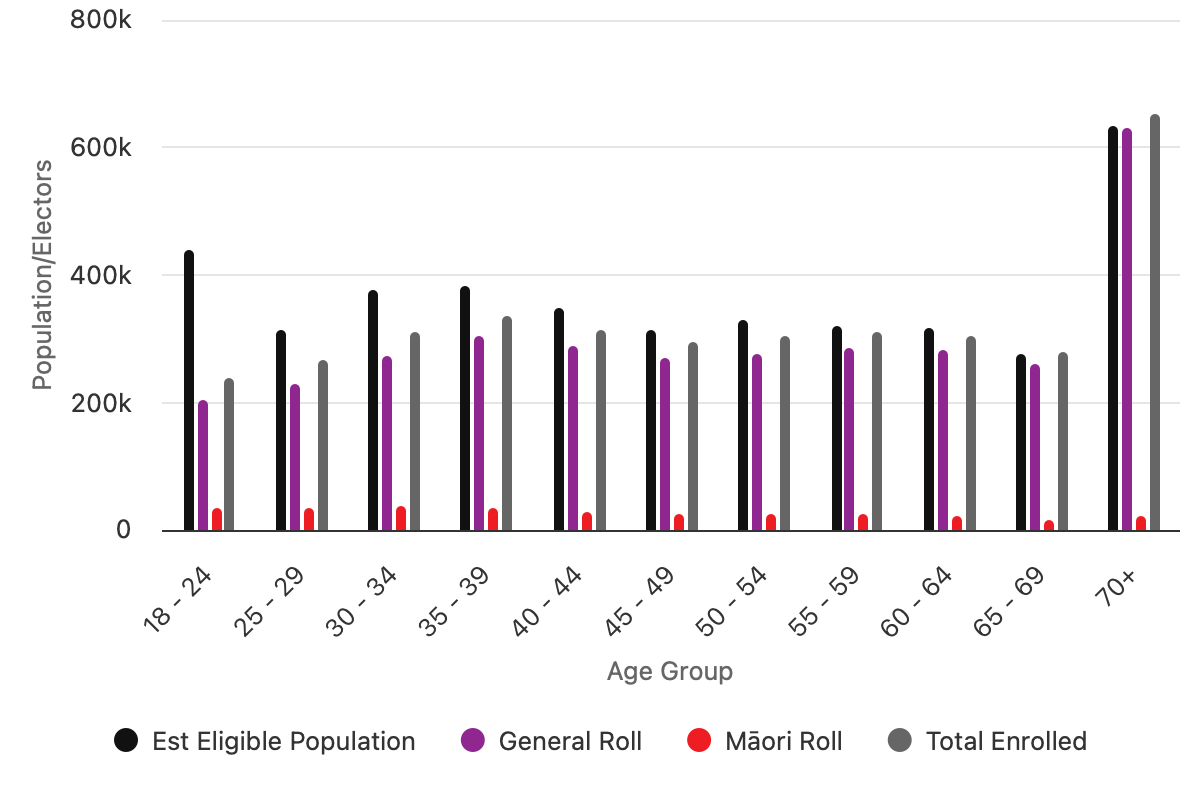
Over 200k 18-24s missing from electoral roll as of July 31
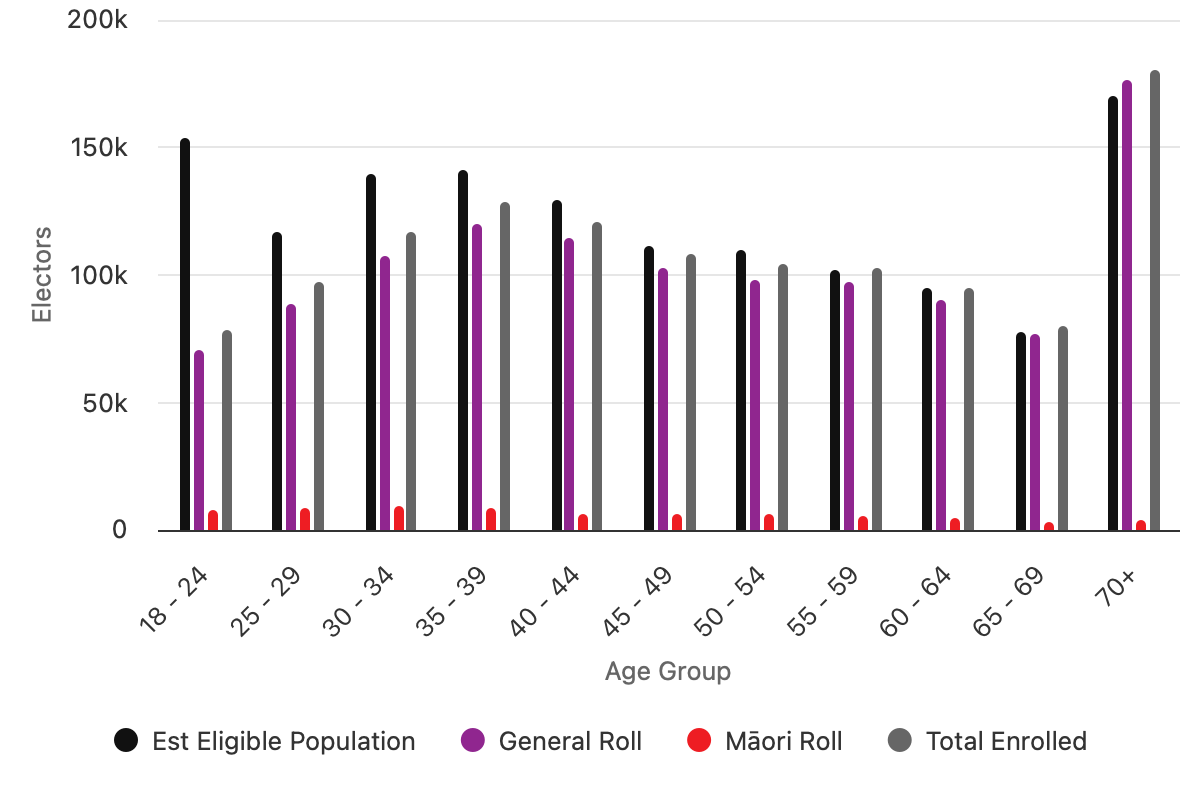
Over 70,000 young people missing from electoral roll in Auckland
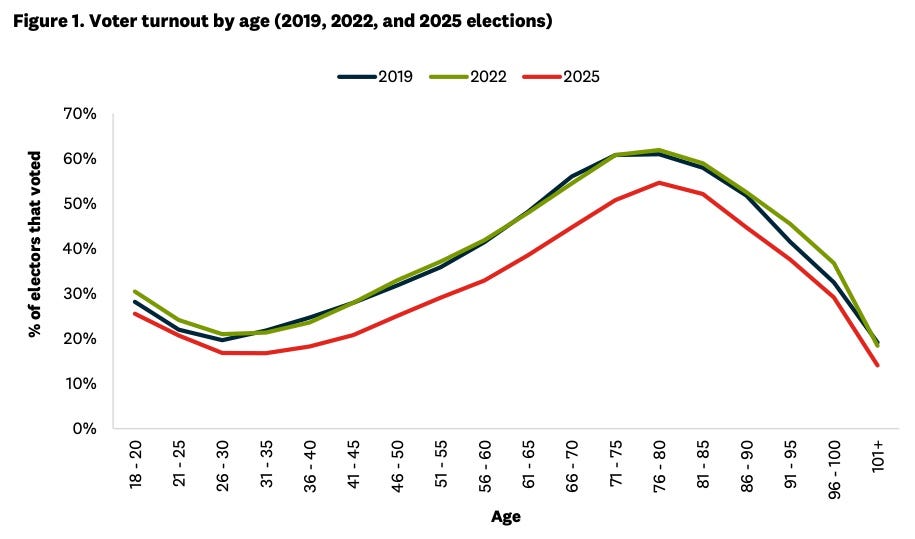
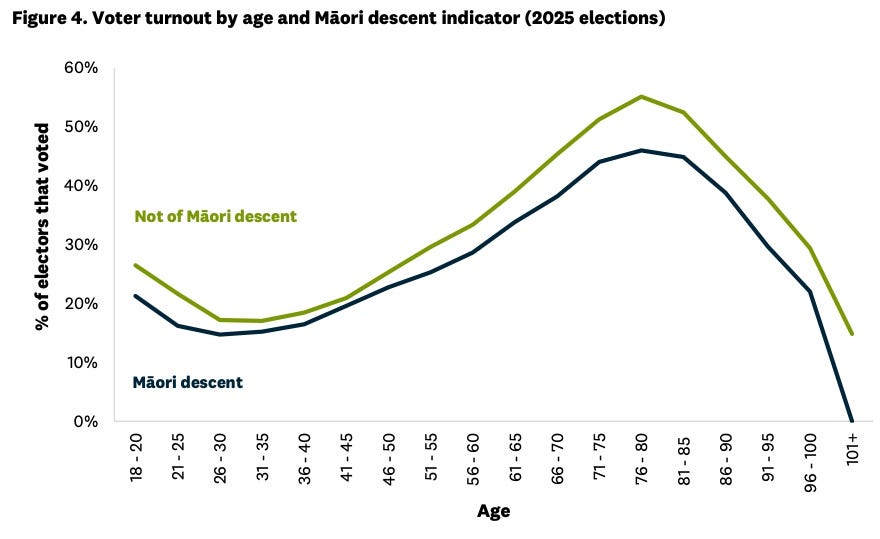
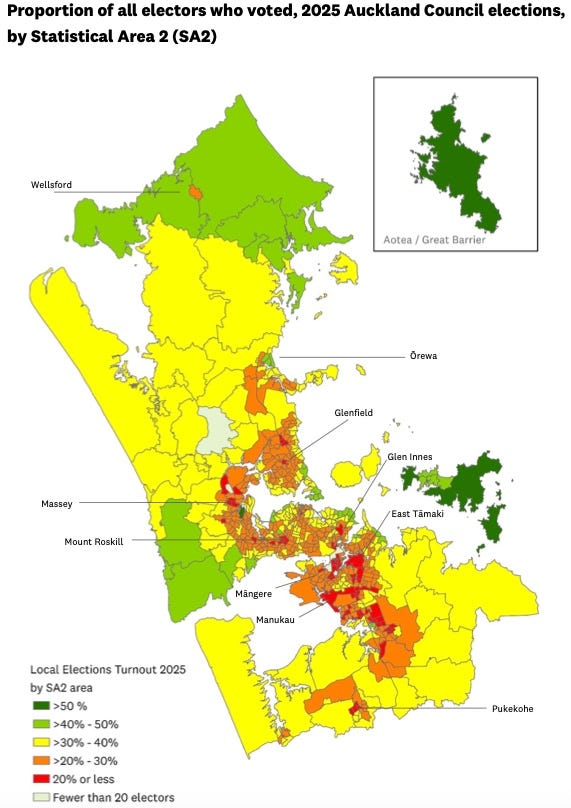
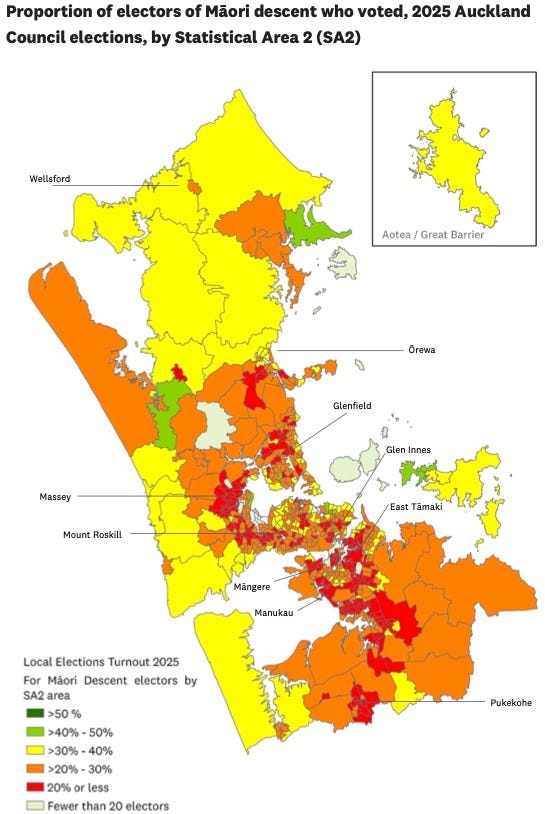
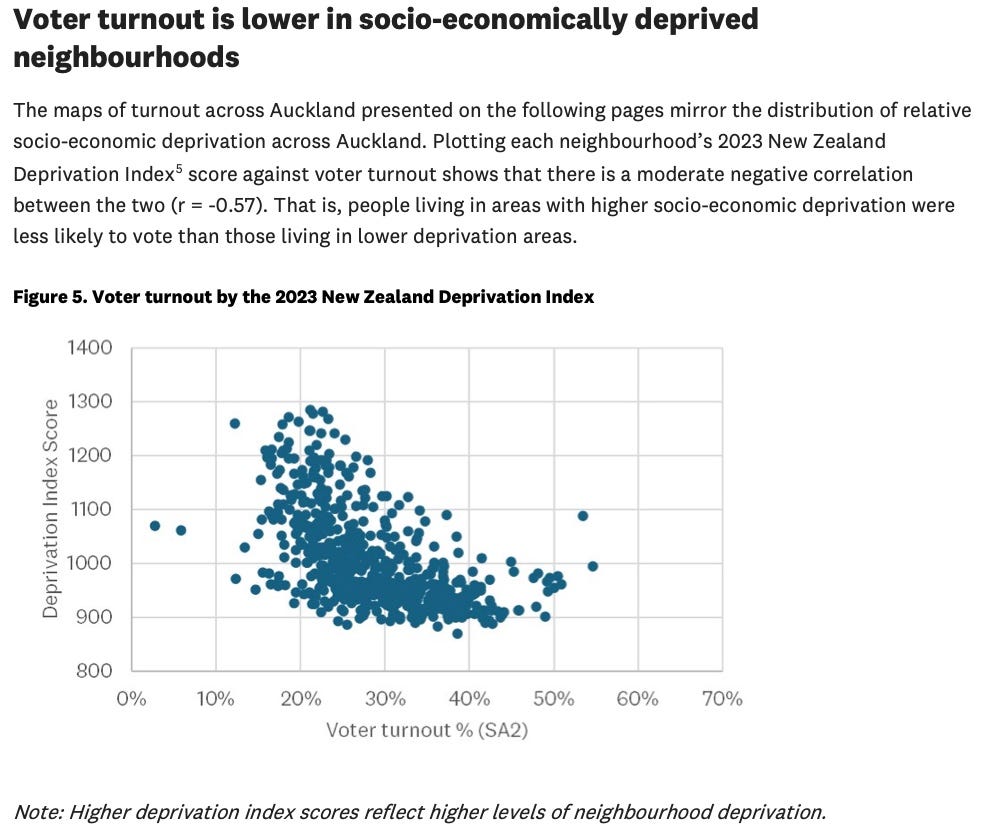
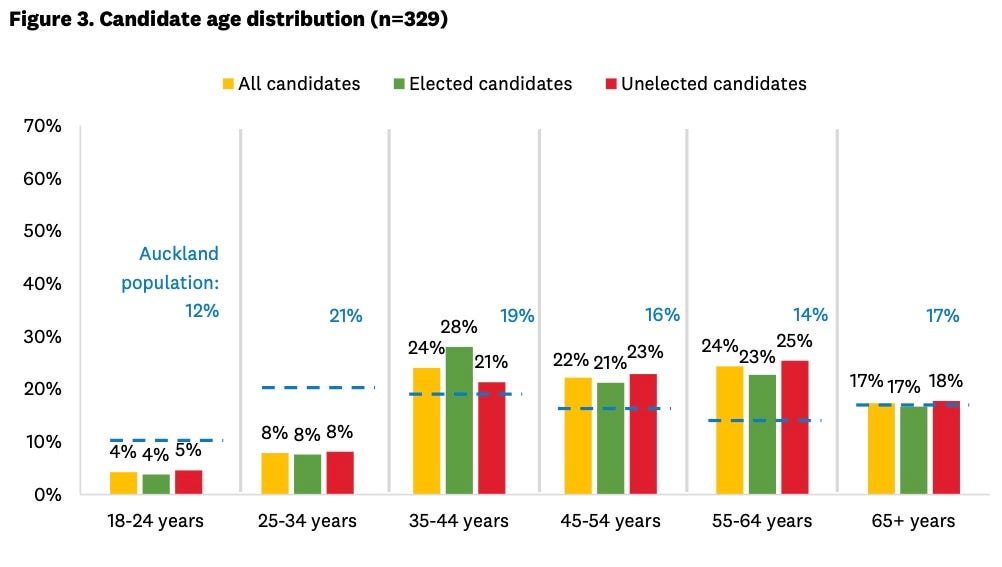
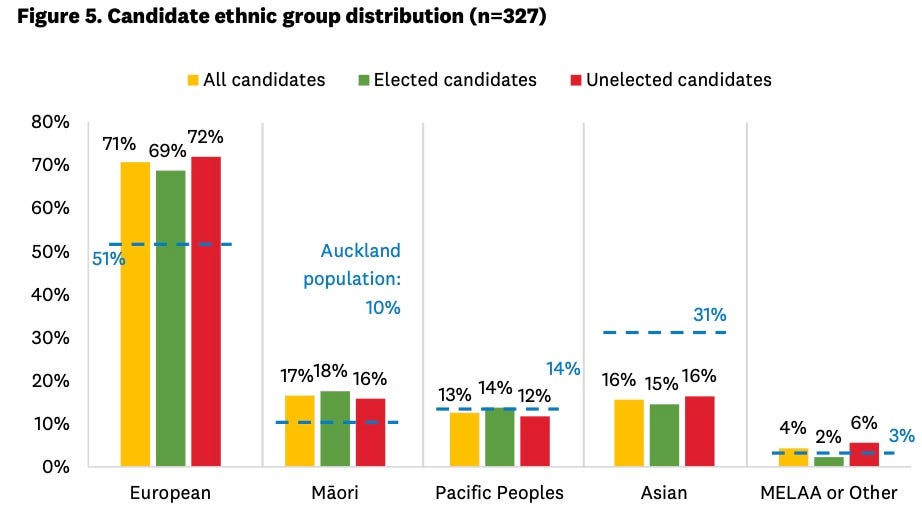
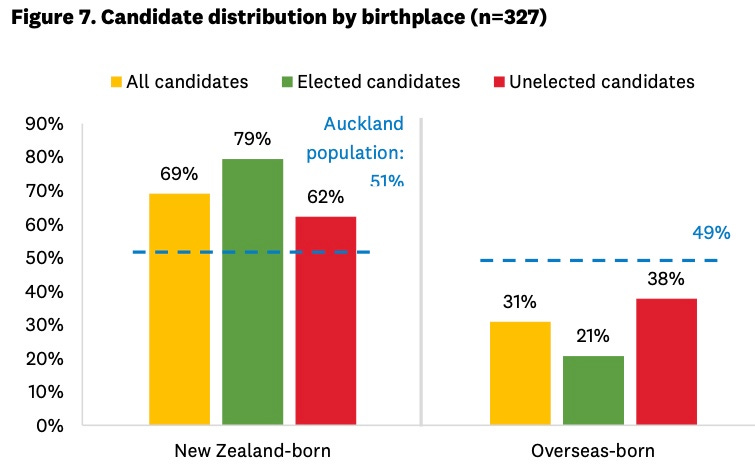
A preview of what that disenfranchisement looks like was evident in the turnout for the Auckland Council elections last year, and the resulting over-representation of older, white, locally-born men as councillors. Turnout overall fell to 29%, but was much worse for young voters and even worse than that for young Māori voters. It was most obvious in West Auckland and South Auckland, where the percentages of voters among young Māori voters fell under 15%.
Turnout among young voters in Auckland election last year under 20%
Auckland councillors more white, more NZ-born & older than population
Democracy eroding in Parliament too
The quality of any democracy is not just about the representation of the population, but the time and care taking in making (and unmaking) laws. The coalition Government has passed more bills in one term under urgency than any other Parliament since records were kept dating back to 2008, Irra Lee reported yesterday for RNZ from Parliamentary Library data.
Govt uses urgency more aggressively than previous Govts
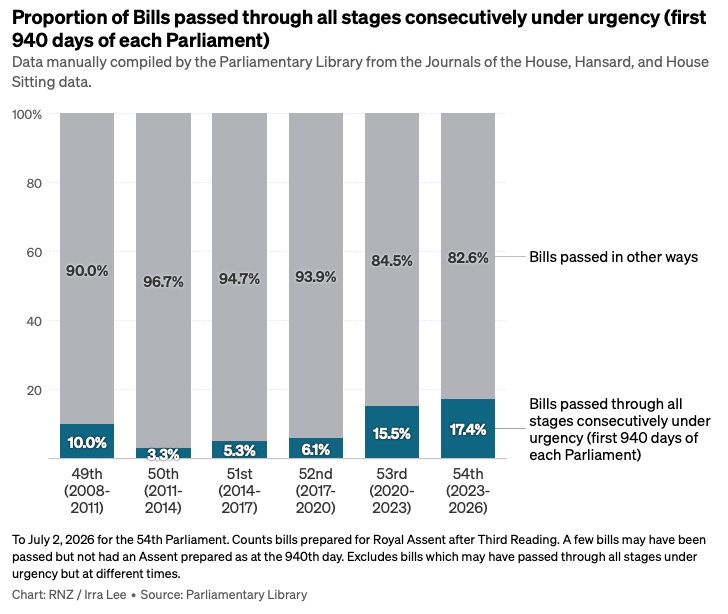
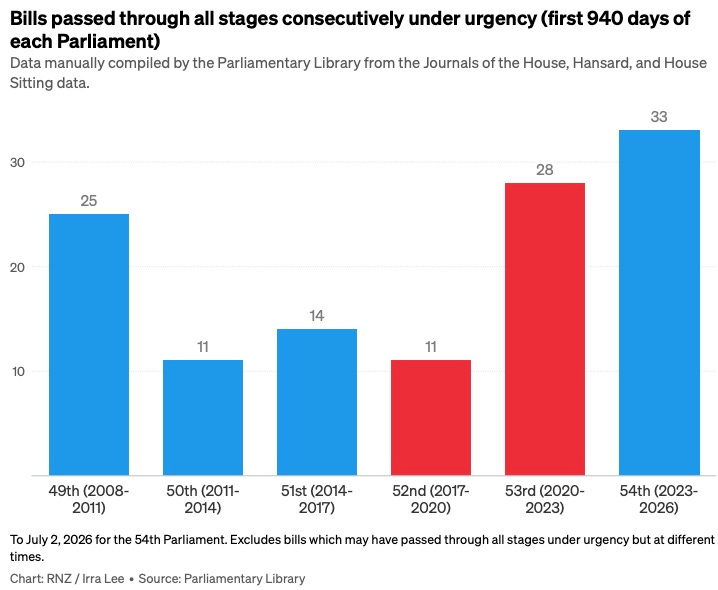
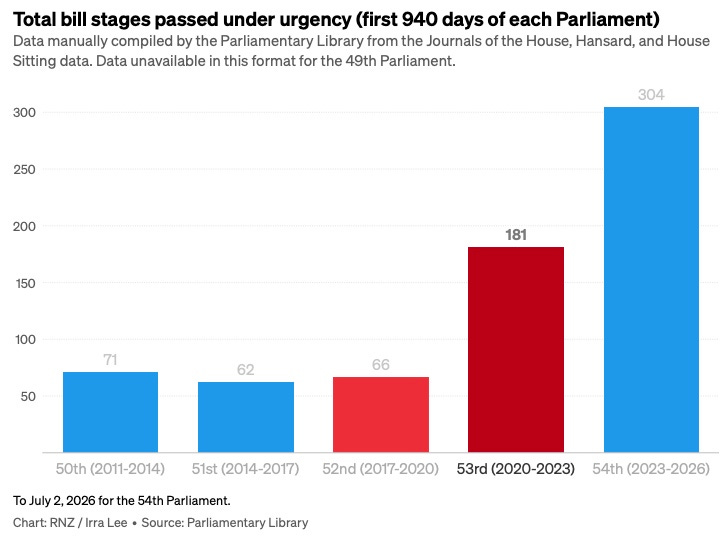
This trend towards disenfranchising new generations of voters is consistent with a push from some activists to make it harder for younger, poorer and browner people to vote, and harder to count, through less comprehensive censuses.
This is a live issue, with the Government shifting to an administrative census from a conventional household-by-household survey4.
My Top ‘Pick n’ Mix’ Six
Deep-dive by Kate Green for RNZ: Curing NZ’s health system: First halt the deterioration, primary care leader says
Explainer by Kate Newton for RNZ: Explainer: What is a data centre and why is everyone freaking out now?
Op-Ed by for Interest: Hyperscale data centres and flickering power ‘Earl Bardsley questions the appetite for ‘littering the landscape’ with windfarms and solar panels to maintain AI data centres established via contracts facing little public scrutiny.
The Post-$: Luxon’s impotence makes him prime minister in name only
Column for Newsroom: Anne Salmond: A tale of two leaders
Column for Newsroom: Gareth Morgan: What a waste of capital ‘The Baby Boomers of the big establishment parties know one economic path – housing investment and immigration. They need to make way for new generations.’
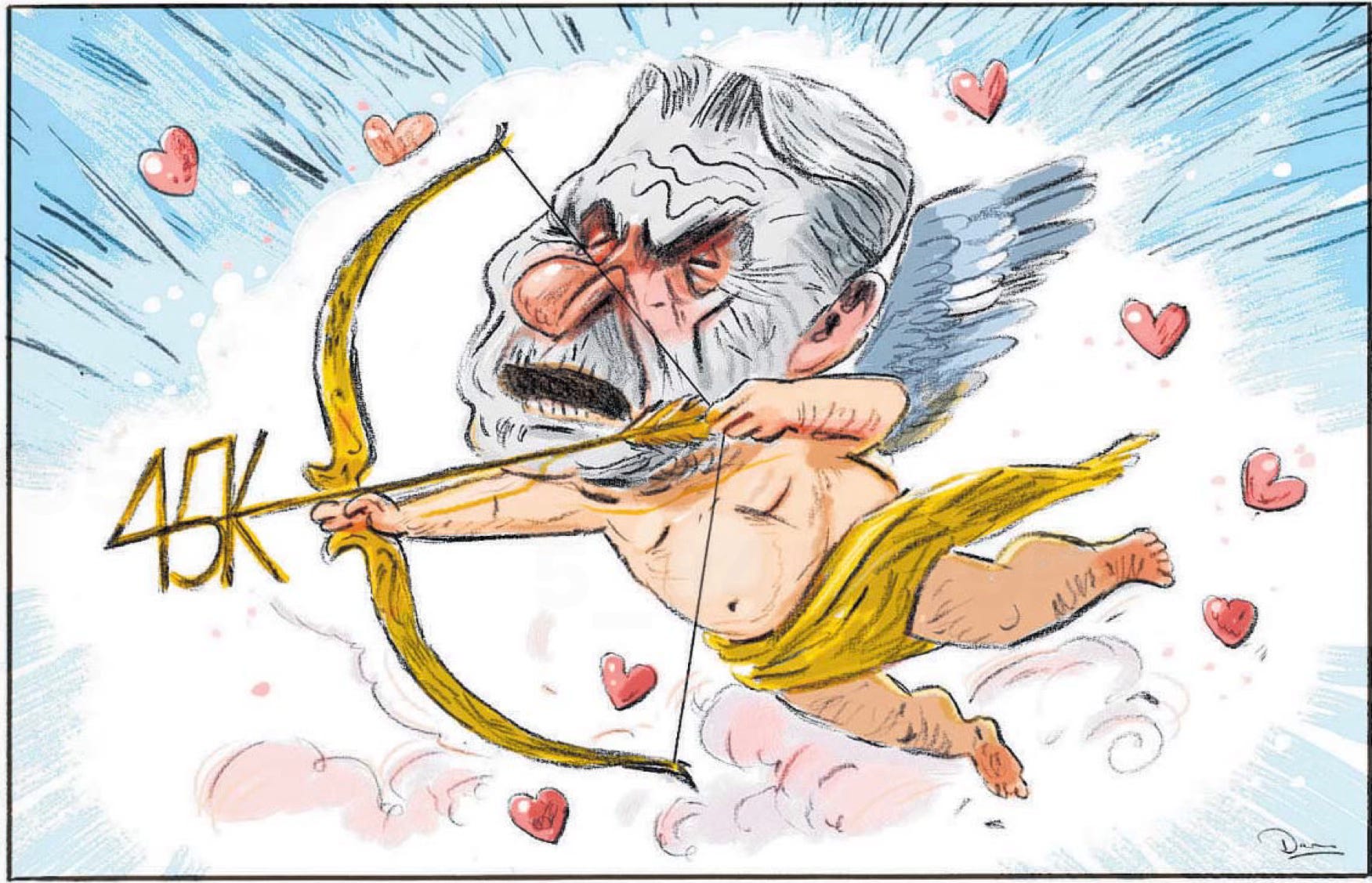
Cartoon of the Day: Angry (& inaccurate) cupid
Timeline-cleansing nature pic: Glorious

cheers
Bernard
Deep-dive by Marc Daalder for Newsroom; Tens of thousands could be turned away from voting – but no one is counting them; Alice Neville for The Spinoff: As election day approaches, what do we know about who’s enrolled to vote? ‘The latest stats show the overall enrolment rate isn’t looking too shabby, but for 18- to 24-year-olds, the picture is more concerning.’
The Post-$: Luxon’s impotence makes him prime minister in name only Comment by Sam Sachdeva for Newsroom: Luxon’s rare business apology exposes deeper political weakness
Lauren Crimp for RNZ: ’Things are screwed anyway, why try?’ Youth voter enrolment plummets
Scoop by Sam Sachdeva for Newsroom: Govt’s census overhaul thrown into doubt after Labour pulls support ‘A 75 percent majority in Parliament is needed as part of census modernisation – numbers the coalition no longer has.’; Mandy Te for Interest: Government census changes on hold after Labour pulls support


