

Mōrena. Voters are most focused on cost of living and underfunded hospitals in this election campaign. National leader Christopher Luxon was criticised in the second leaders debate last night for wrongly saying the minimum wage was keeping up with those living costs.
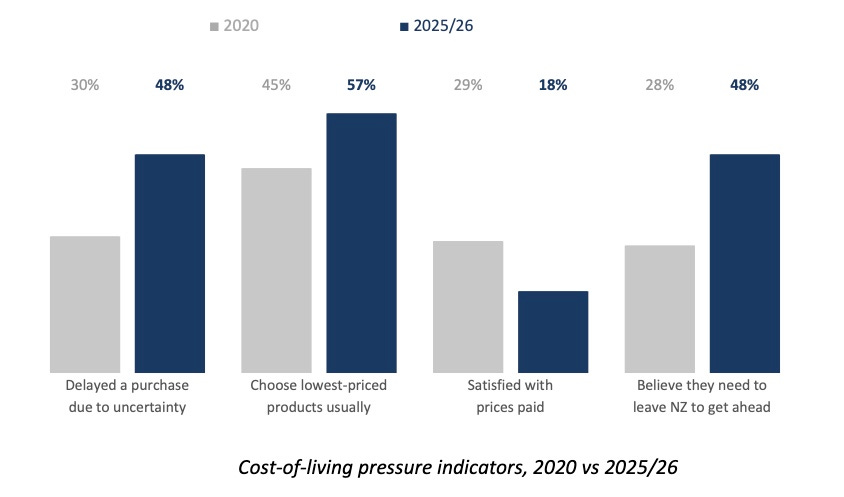
This came as a big new survey published this morning has found the biggest group of New Zealanders (27%) now feel they’re struggling financially, up from 16.5% who felt that in 2020. There was also a dramatic increase in respondents saying they felt they had to leave New Zealand to get ahead (48% vs 28% in 2020).
Also in the news this morning, hospital stress concerns will not be helped by news that Auckland’s Starship Hospital has suspended chemotherapy treatment and bone marrow transplants for cancer patients because of a staffing crisis.
See more on that and the other key news in Picks n’ Mixes and more below. There will be the usual weekly Hoon for paying subscribers from 5pm to 6pm today.
(I have opened this one up to all immediately because it’s topical. Thanks in advance to our paying subscribers who enable me to do this sort of work. Join us as a subscriber if you’d like to see more of this sort of work. Here’s a 50% off introductory offer for new subscribers for the first year.)
48% now feel they have to leave NZ to get ahead
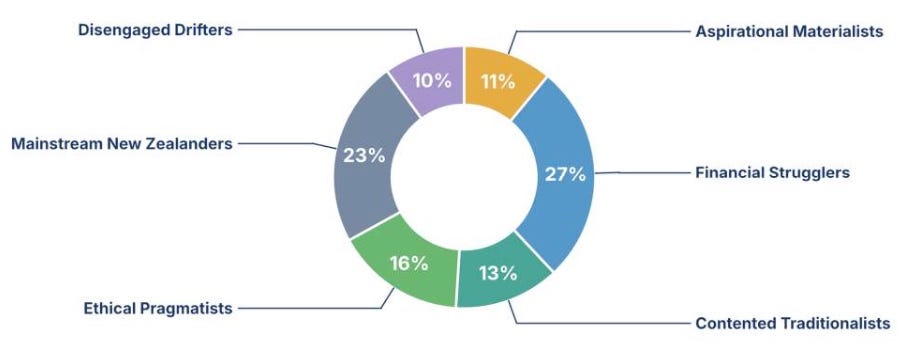
A major and long-running survey of consumer attitudes by the University of Otago has found 27% of New Zealanders now see themselves as financial strugglers, being unable to pay for essentials and least satisfied with their standards of living.
This group is now the largest segment in the population, being up from 16.5% when the survey of over 1,000 consumers was conducted in 2020. The survey found 40% said they were struggling to pay for essentials, and 52% had gone without something they would usually purchase in order to be able to pay for essentials.
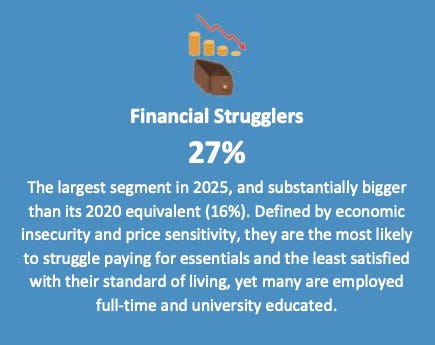
“The Financial Strugglers are defined by economic vulnerability, price sensitivity and pessimism experiencing New Zealand through the lens of considerable financial pressure.”
It also found 48% felt they needed to leave New Zealand to get ahead, up from 28% in 2020.
The survey’s authors described the ‘financial strugglers’ as “highly concerned about the economy and cost of living, extremely price conscious, and comparatively pessimistic about both their own circumstances and the wider direction of New Zealand.”
“They are much less likely than other groups to feel financially secure, the least likely segment to believe that their family is financially better off than a year earlier and the least satisfied with the prices they pay.
“Financial Strugglers represent the highest proportion in the middle-income bracket (51-75K), the second highest proportion with a university education, the second-highest proportion who own their own home (paying a mortgage), and the second highest proportion engaged in full-time employment.
“This suggests that these economic and personal factors do not necessarily protect individuals from experiencing financial hardship.” The University of Otago’s New Zealand Consumer Lifestyles Study authors Leah Watkins, Rob Aitken, Lisa McNeill, John Williams, Maddie Judge and Helen Owen.
This group reported comparatively low satisfaction with their standard of living, health, achievements and future security.
“They are also less likely to describe their lives as purposeful, their relationships as rewarding or themselves as engaged with daily life. Their outlook on the country is similarly negative, especially regarding the economy, government, business and social conditions.
“They are not, however, socially isolated or completely disengaged; rather, financial pressure appears to colour how they perceive many aspects of their lives. They are particularly concerned about inequality, believing strongly that the gap between rich and poor is growing and that getting ahead requires leaving New Zealand.
“They are sceptical of business motives and favour restrictions on advertising to children. They strongly believe that businesses prioritize profits over consumers and are worried about excessive foreign investment in New Zealand. They are also report feeling hopelessness about the cost of living and the climate crisis.” The University of Otago’s New Zealand Consumer Lifestyles Study authors Leah Watkins, Rob Aitken, Lisa McNeill, John Williams, Maddie Judge and Helen Owen.
Feelings of economic insecurity dominate
The report’s authors wrote the strongest set of changes related to economic insecurity.
“Public satisfaction with the economic situation in NZ was relatively low, averaging 4.3 out of 10. 48% of respondents who agreed that uncertainty about the economy was preventing them from making purchases they would otherwise make, compared with 30% in 2020.
“40% of respondents said they were struggling to pay for essentials, and 52% had gone without something they would usually purchase in order to be able to pay for essentials. 22% reported feeling angry about the cost of living, while 28% felt anxious. 75% believe that the current high cost of living is likely to persist for several years.
“65% of people are more worried about the economy than they were a year ago. Only 36% feel secure about their personal income, and only 25% felt they their family was better off financially than a year ago. 79% think that the gap between the rich and the poor in NZ is growing, and 59% agreed that the government should take measures to reduce differences in income levels.” The University of Otago’s New Zealand Consumer Lifestyles Study authors Leah Watkins, Rob Aitken, Lisa McNeill, John Williams, Maddie Judge and Helen Owen.
While 60% thought they paid too much tax (up from 40% in 2020), 52% of people were willing to pay more tax if it is targeted towards front line workers in health and education.
“More than seven in ten respondents (71%) believed that government spending on health services is too low, making it one of the highest levels of agreement recorded in the survey.
(I have opened this one up to all immediately because it’s topical. Thanks in advance to our paying subscribers who enable me to do this sort of work. Join us as a subscriber if you’d like to see more of this sort of work. Here’s a 50% off introductory offer for new subscribers for the first year.)
Top Six News items of the Day
A major and long-running survey of consumer attitudes by the University of Otago has found 27% of New Zealanders now see themselves as financial strugglers, being unable to pay for essentials and least satisfied with their standards of living. This group is now the largest segment in the population, being up from 16.5% when the survey of over 1,000 consumers was conducted in 2020. The survey found 40% said they were struggling to pay for essentials, and 52% had gone without something they would usually purchase in order to be able to pay for essentials. It also found 48% felt they needed to leave New Zealand to get ahead, up from 28% in 2020.
National has reversed its support for pro-intensification council parking rules in another concession to car-dominated suburban voters, who see townhouses and apartments adding to parking shortages.
NZ First has announced it wants to take housing projects out of the Fast Track process until after infrastructure issues are solved.
ACT has pledged to allow rental property investors to again deduct losses from their rental properties from their personal income, including wages and salaries. The policy of removing ring-fencing of losses would cost around $300 million in lost tax revenues.
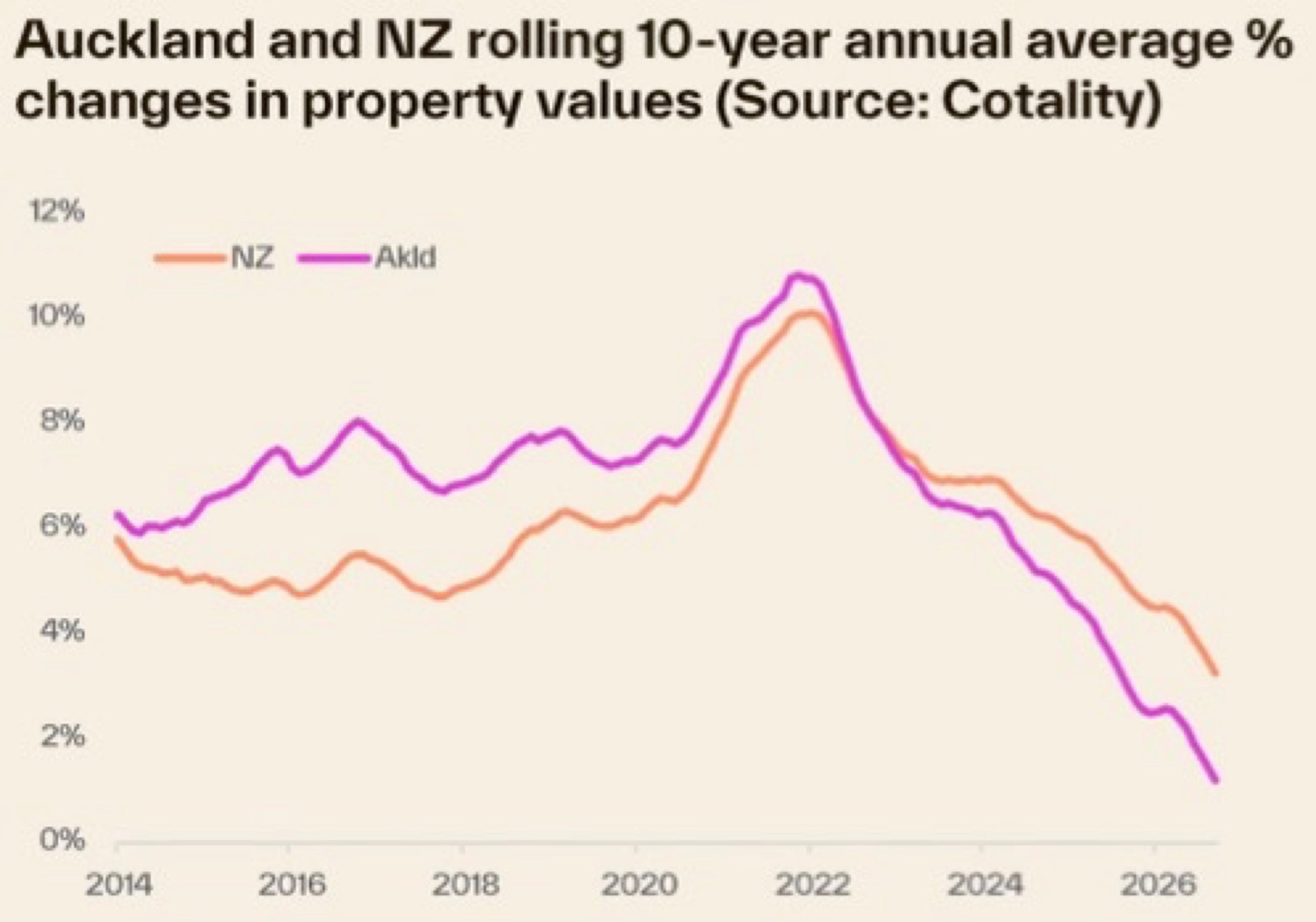
Housing market data analyst Cotality has this morning published an analysis arguing New Zealand may already be transitioning to a lower-growth housing market, ‘with the rapid price gains of previous decades becoming less common. It pointed out Auckland’s average price gain for the last 10 years had sunk to barely 1%.
The Scoop of the Day is from Lane Nichols at NZ Herald-$: Starship suspends child cancer treatments amid staff crisis
Charts of the Day: When Financial Strugglers give up
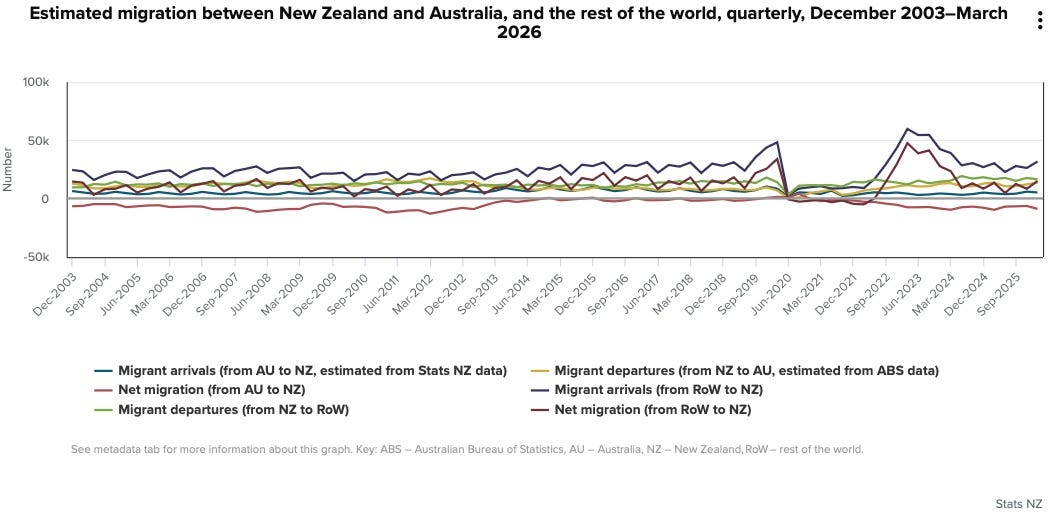
The days of booms & wonder are ending
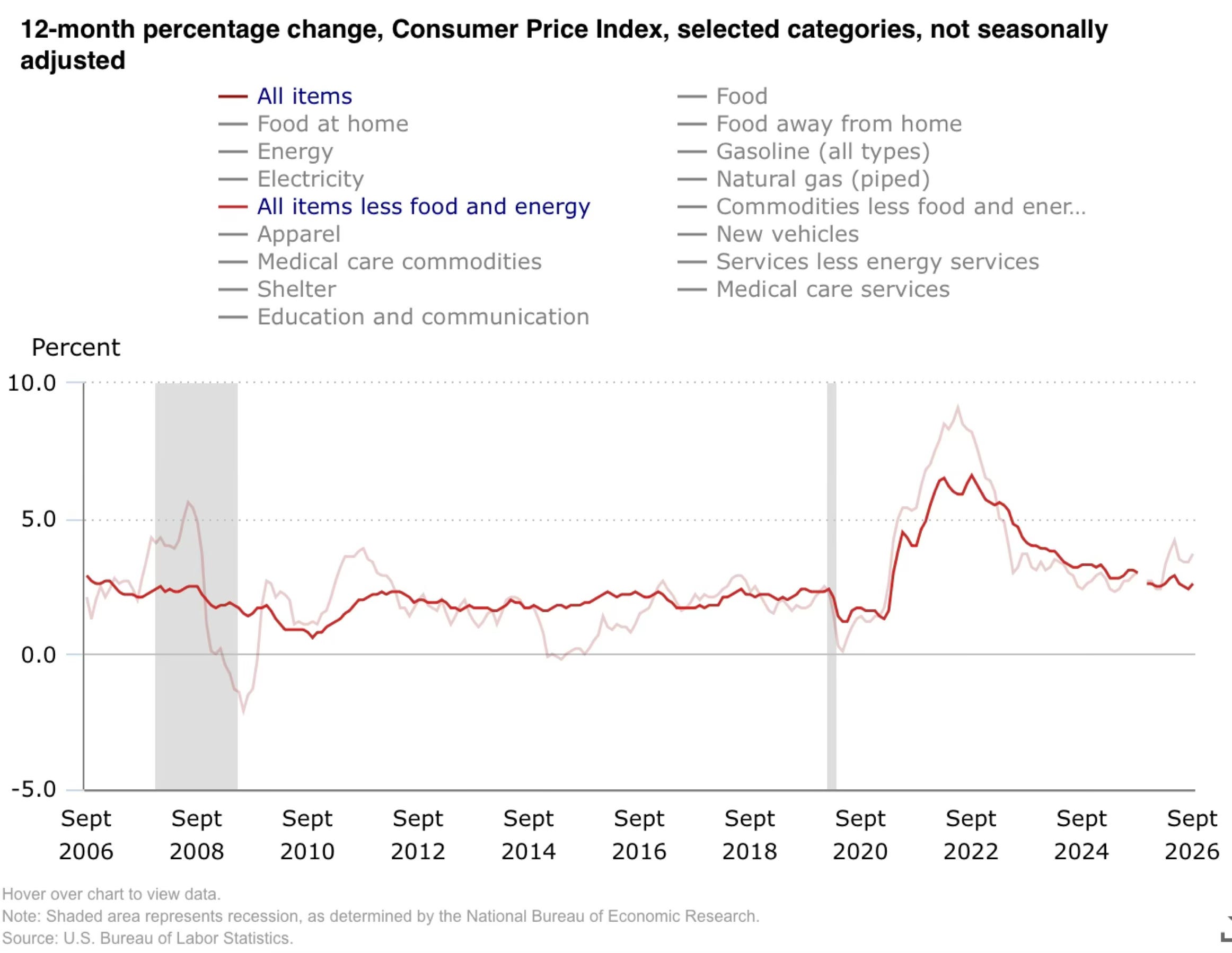
US core inflation of 0.3% in Sept; higher than 0.2% expected
The Best of the Rest
Top Six Scoops & Breaking News items of the Day
Thomas Manch for BusinessDesk-$: Corrections scraps PPP negotiations for prison ‘Consortium considered for Waikeria Prison expansion wanted ‘untenable’ terms.’
Keiller Macduff for RNZ: Internal documents warn of food safety risk after MPI said none existed
Phil Pennington for RNZ: Affordability of hospitals’ upgrade a ‘major concern’ documents show
Sam Sherwood for RNZ: Corrections admits failures over sexual harassment claims
Hamish McNeilly for Stuff: 84 year old denied cash withdrawal from bank he has been with for 70 years
Reuters: Iran shifting tactics to step up attacks on shipping before US vote
Top Six Features, Deep-dives & Comment of the Day
Interview with Paul Fuge for RNZ Nine to Noon: Poorest could face highest power bill shock in overhaul, Consumer NZ warns
Investigation by Denise Piper for Northern Advocate: Solo mum sells home, empties KiwiSaver to fund cancer fight NZ won’t pay for
Deep-dive by Matthew Theunissen for RNZ: The Kiwis avoiding the big supermarkets
Op-Ed by John Small for The Post-$: Commerce Commission: ‘Not helpful’ to regulate new water entity’s earnings ‒ yet
Deep-dive by Amanda Gillies for RNZ/Newsroom’s The Detail: Dirty money, dodgy deals and the building trade
Deep-dive by Felix Walton for RNZ: The missed warnings that may have helped prevent prisoner’s suicide
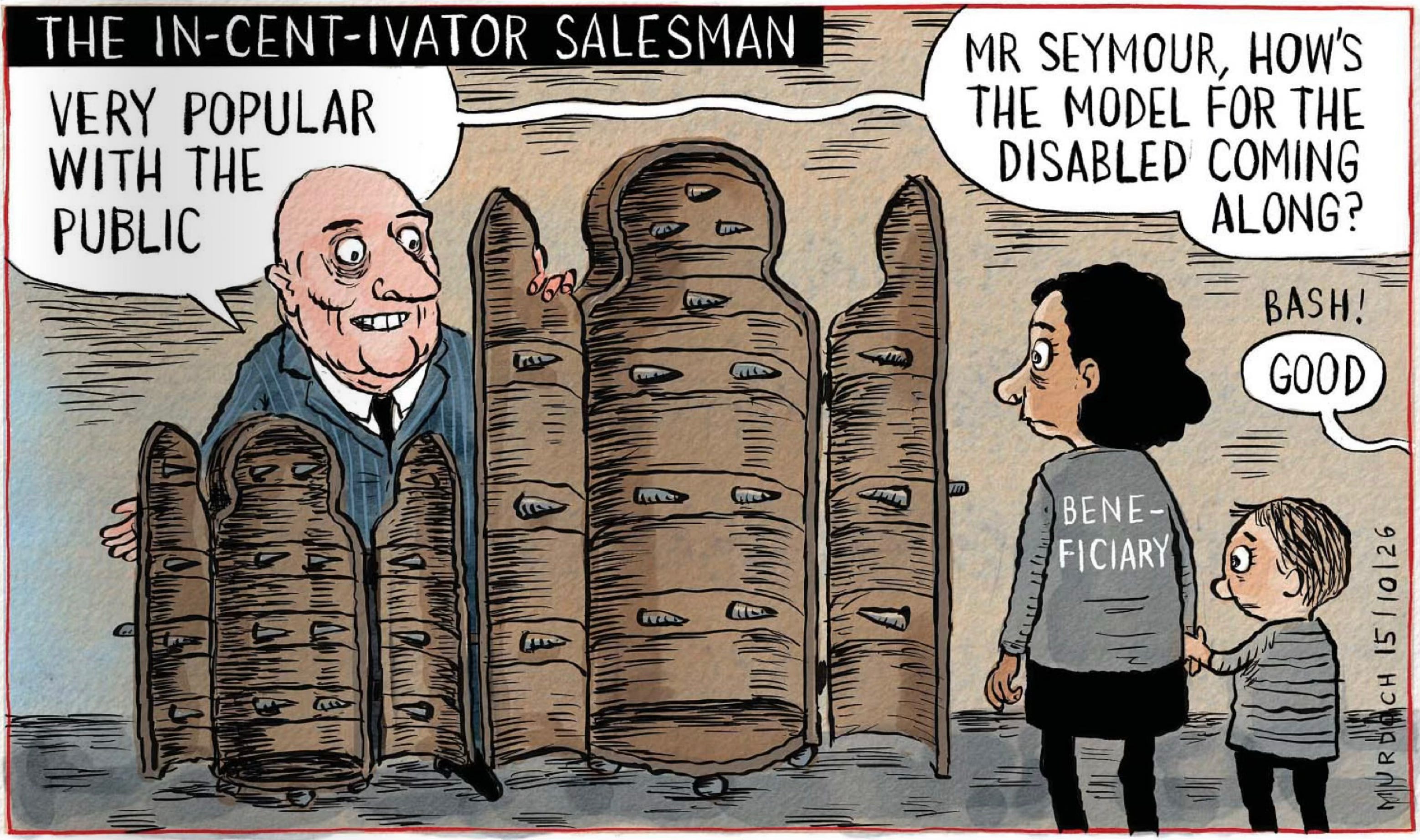
Cartoon of the day: A fiscal squeeze machine
Cheers
Bernard
PS: See the full Picks n’ Mixes & In the Papers for today here online only for paying subscribers. It was published earlier today.


